

Radiation-hardened LEON3-FT single-board computer for mission management, navigation and payload processing on LEO, MEO and GEO satellites.
Download PDFApplications
- Mission management computer for LEO and MEO
- Navigation computer for LEO and MEO
- Payload computer for LEO, MEO and GEO
Compliant with
- NASA standards
- ECSS standards, including Q-ST and E-ST
- MIL-STD-810
- MIL-STD-4161E
Highlights
- Ready to fly and customizable for the mission configuration.
- Engineering model (EM) for software development and flight model (FM) for qualification.
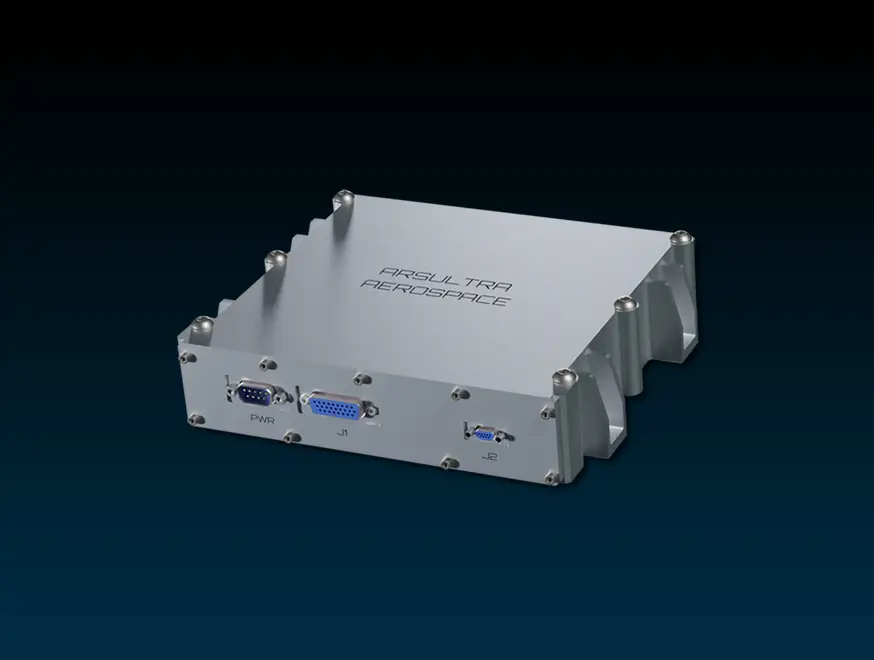
Overview
- Single +5V external input voltage.
- High-performance rad-hard components.
- Board size 150 × 155 × 15 mm.
- Three micro-DB9 and three high-density D-subminiature connectors for the external interfaces.
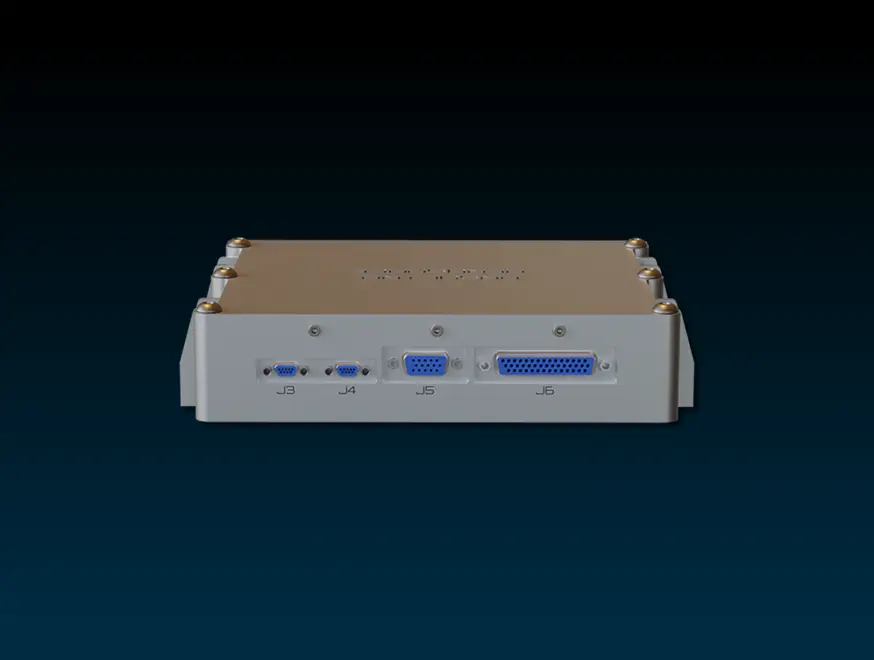
Main features
- One dual-core LEON3-FT SPARC V8 compliant 32-bit processor.
- One 32K × 8-bit PROM memory.
- Two 8M × 8-bit flash memories.
- One 4M × 39-bit SRAM memory (32 data bits plus 7 bits for EDAC).
- One 64M × 48-bit SDRAM memory (32 data bits plus 16 bits for Reed-Solomon EDAC).
- Power supervisory circuit to monitor the supply voltages and protect the CPU.
- Watchdog that resets the computer automatically if the software fails.
- Triple hardware rescue if the software fails.
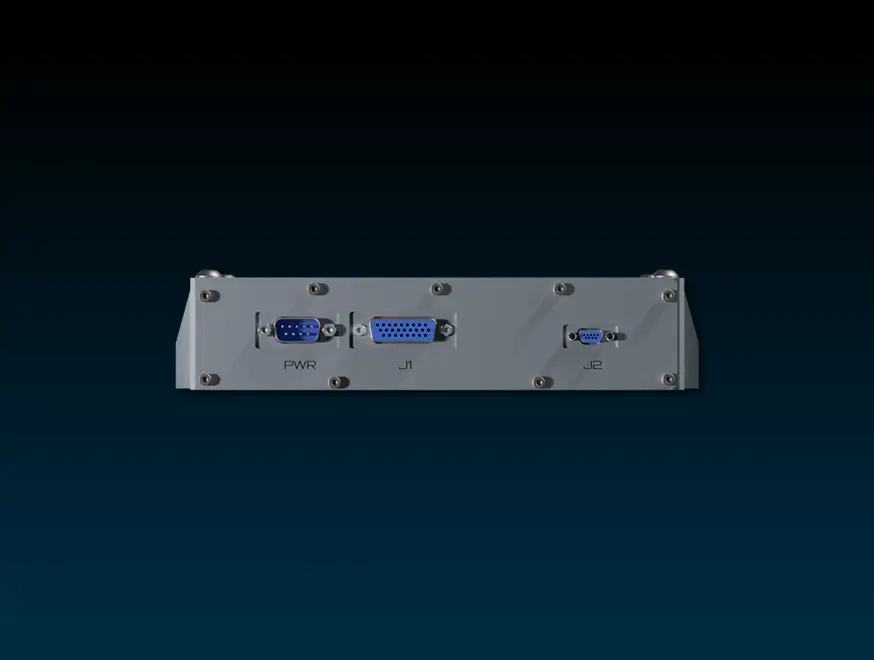
Interfaces
- Four RS-422 full-duplex ports.
- Two SpaceWire ports.
- Two CAN 2.0 buses.
- SPI / I2C.
- Eight general-purpose inputs and eight general-purpose outputs.
- One telemetry / telecommand (TM/TC) RS-422 port.
- Pulse-per-second: two input and two output RS-422 ports.
- One JTAG interface for programming and debugging.
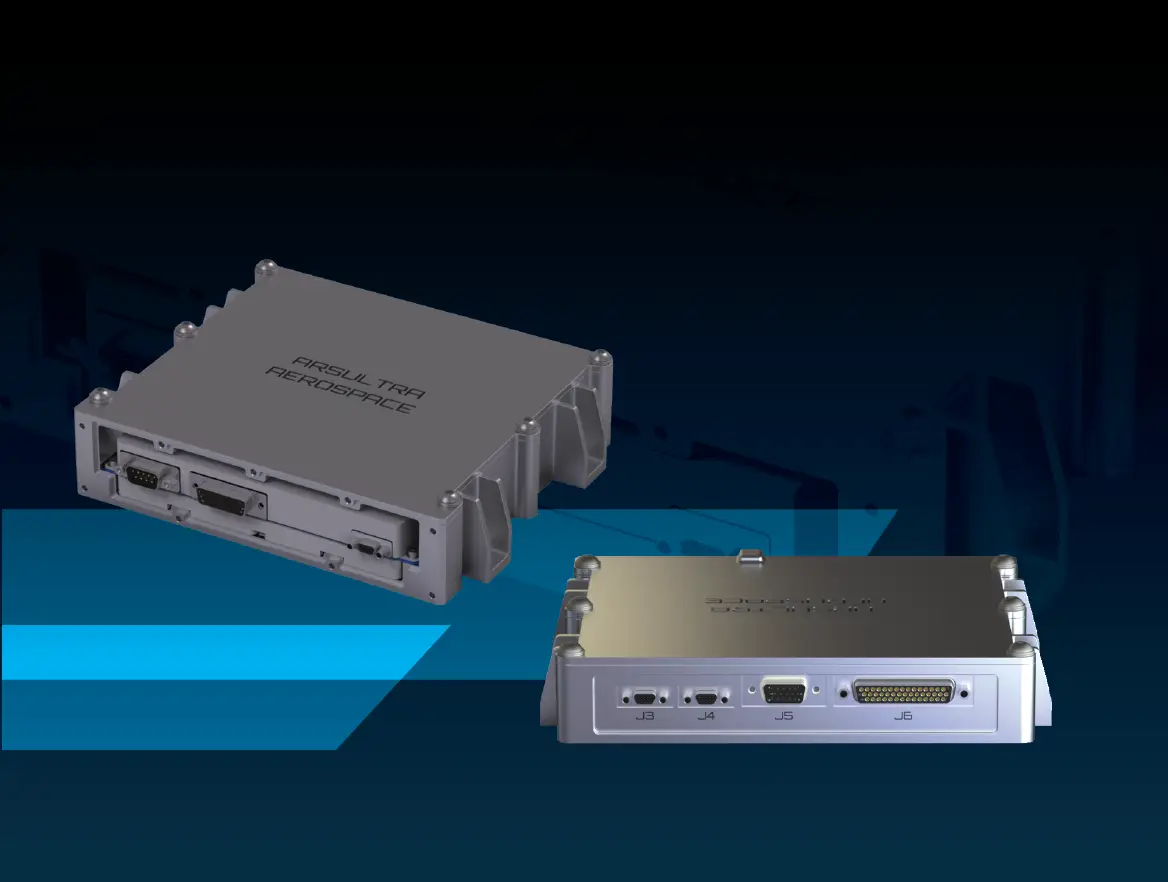
Environment and construction
Figures below are taken from the product brochure and describe the interface components and the mechanical design. They do not replace a mission-specific radiation analysis.
- RS-422 components: total dose 300 krad(Si) maximum, SEU LET 100 MeV/mg/cm², single-event latch-up immune.
- SpaceWire: compatible with IEEE 1596.3 SCI LVDS and ANSI/TIA/EIA-644. TID greater than 100 krad(Si). SEL greater than 80 MeV·cm²/mg.
- CAN 2.0: SEE immune to LET 86 MeV·cm²/mg. High and low dose rate 100 krad(Si).
- Temperature range −55 °C to +125 °C.
- Enclosure in aluminum 6061-T6, hardware per ECSS-Q-ST-70. Screws, bolts and washers in titanium. Gears and shafts in stainless steel AISI 304, bronze and PEEK. Surface finish shielded to mitigate radiation effects on the electronics.