
Modular 3U OpenVPX onboard computer with a LEON3-FT processor for guidance and mission control on LEO, MEO and GEO satellites.
Download PDFApplications
- Modular mission-management onboard computer for LEO and MEO
- Modular navigation computer for LEO and MEO
- Modular payload computer for LEO, MEO and GEO
Compliant with
- NASA standards
- ECSS standards, including Q-ST and E-ST
- MIL-STD-810
- MIL-STD-4161E
- VITA standards for critical embedded systems
Highlights
- Ready to fly, with room to grow through additional daughtercards.
- Engineering model (EM) for software development and flight model (FM) for qualification.
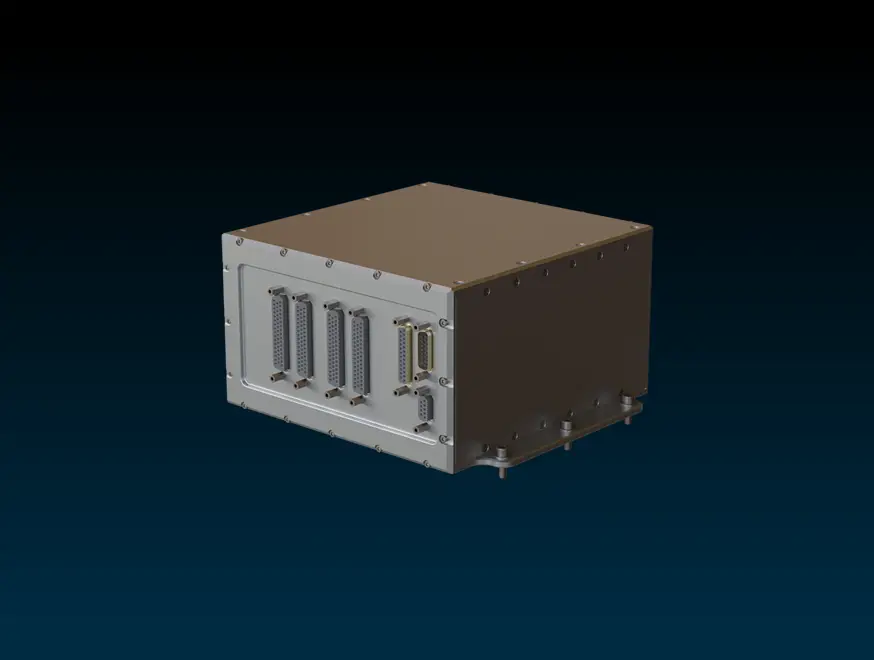
OpenVPX / LEON3 OBC
ITAR-free OpenVPX LEON3 fault-tolerant CPU for space applications.
Odyssey-MOD-L3 was developed in the 3U OpenVPX form factor so the system can be reconfigured with daughtercards defined by the relevant ANSI/VITA standards.
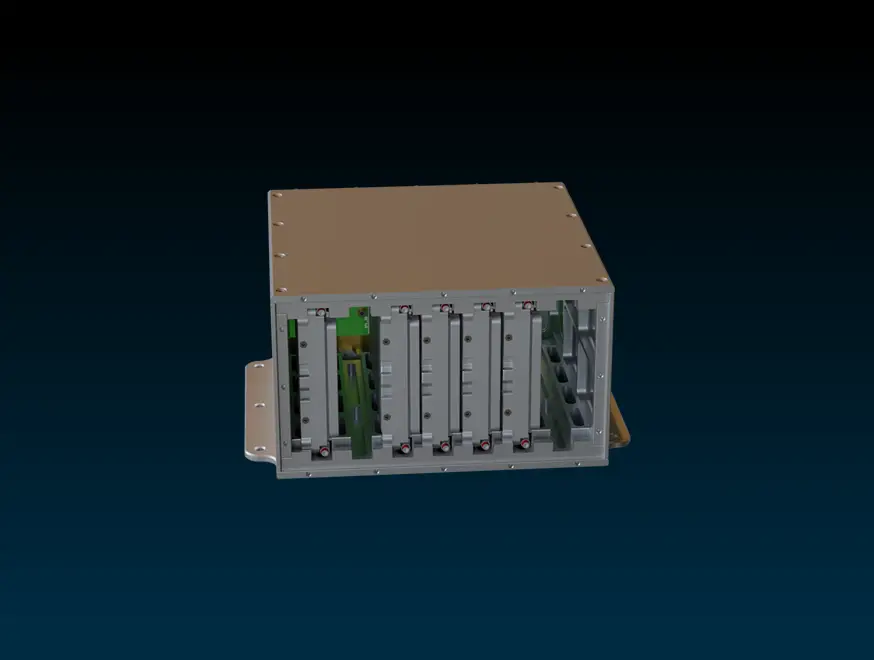
Flexible system design
Flexible system design based on a rad-hard CPU board under the OpenVPX standard.
- Single +5 V external input.
- High-performance rad-hard components.
- 3U VPX (VITA 46) form factor and architecture.
- MULTIGIG RT 2-R ruggedized connectors for VPX, compliant with VITA 46, with a quad-redundant contact designed for high vibration.
- MULTI-BEAM XLE power connectors, compliant with VITA 62.
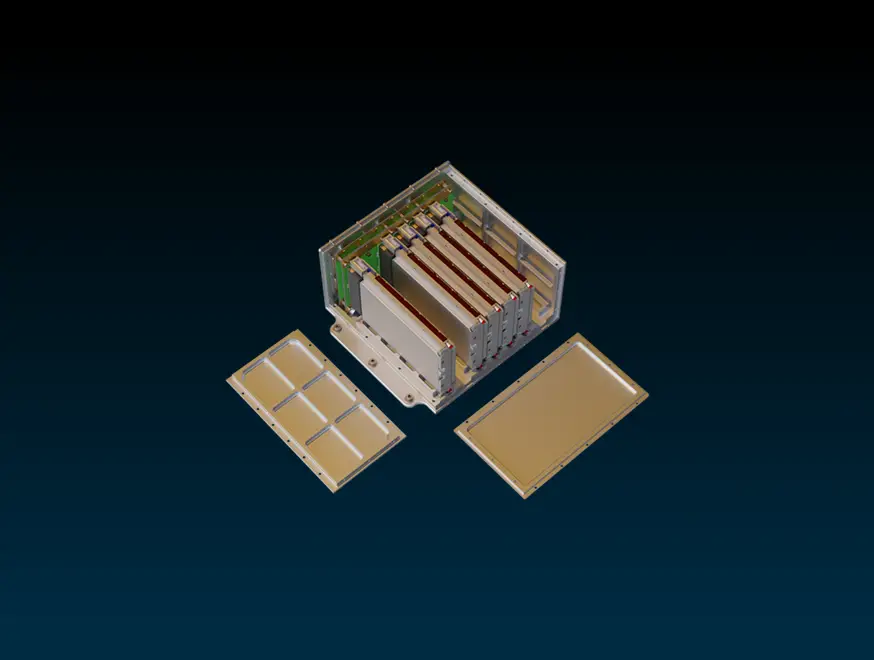
Enclosure
The enclosure was developed to the OpenVPX standard, ANSI/VITA 46, 48 and 65, in a 3U form factor with conduction cooling.
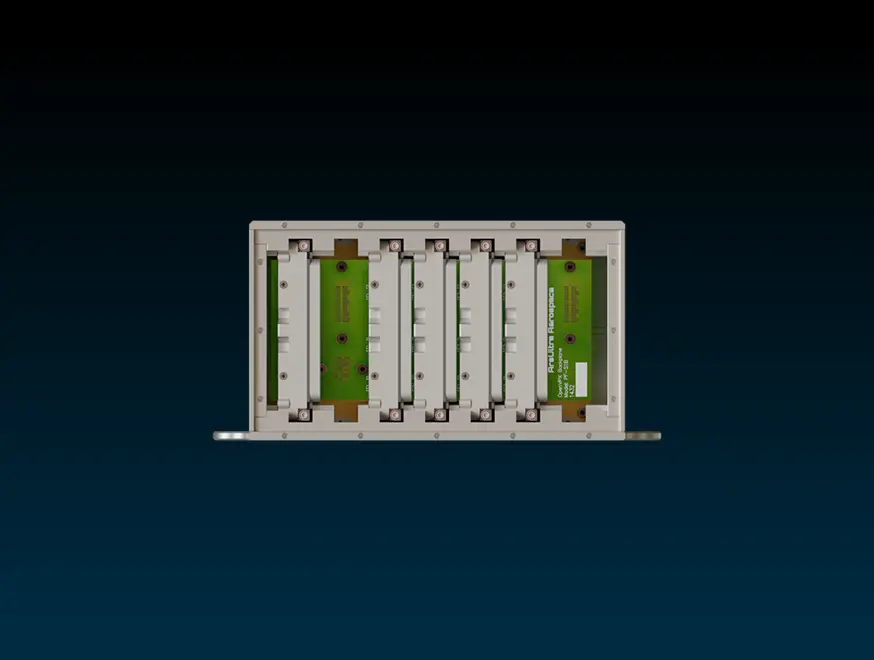
Plug-in modules
The 3U plug-in modules follow the conduction-cooled mechanical design of the OpenVPX standard. Each plug-in module is designed for a 1-inch rear pitch.
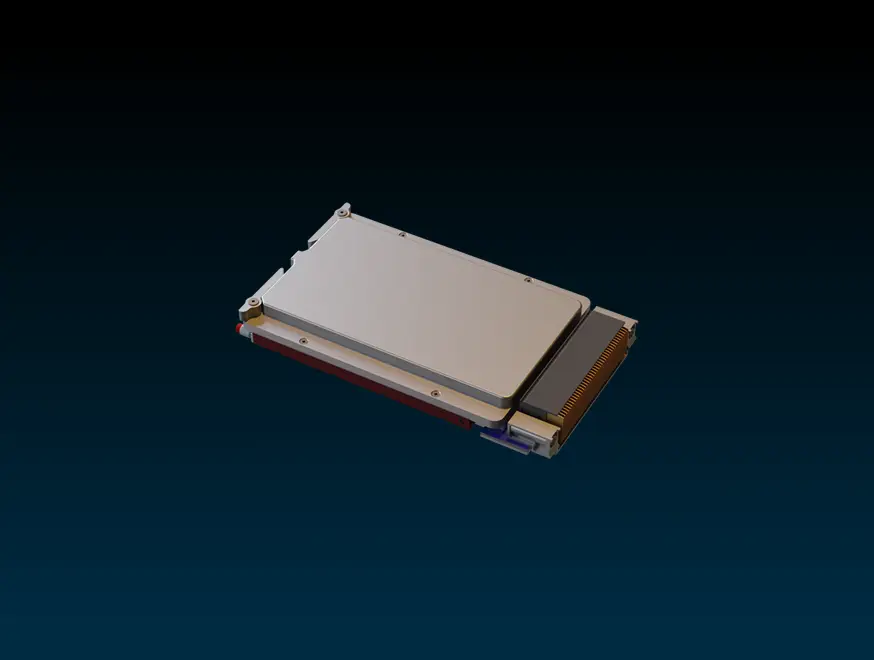
Card locks
Card-lock retainers ensure the correct assembly and the thermal interface between the electronics modules and the main enclosure.
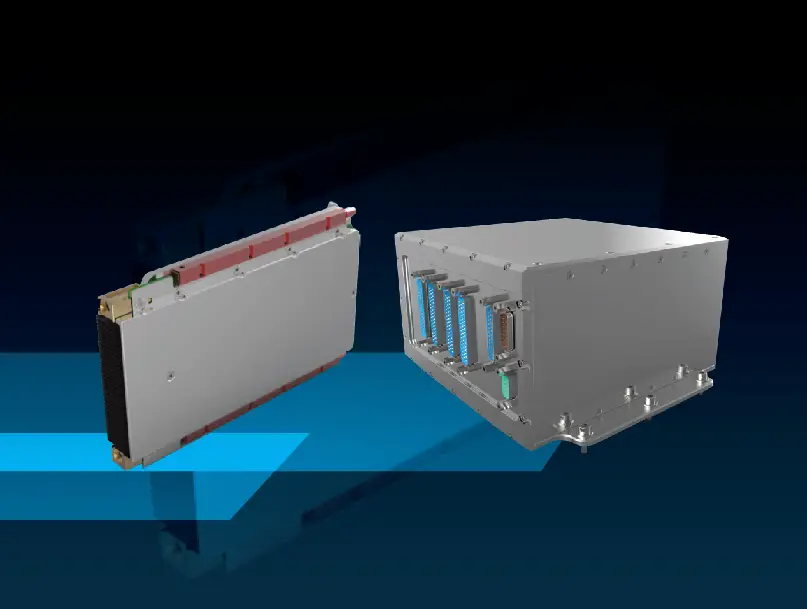
Main features
- One dual-core LEON3-FT SPARC V8 compliant 32-bit processor.
- OpenVPX carrier boards for I/O, mass memory and the power supply.
- Power supervisory circuit to monitor the supply voltages and protect the CPU.
- Watchdog that resets the computer automatically if the software fails.
- Mission-defined I/O, including RS-422 full-duplex, SpaceWire and CAN 2.0.
- SPI / I2C, eight general-purpose inputs and eight outputs, one TM/TC RS-422 port, pulse-per-second RS-422, and JTAG.
Environment and construction
Radiation figures below come from the product brochure and refer to the interface components.
- RS-422 components: total dose 300 krad(Si) maximum, SEU LET 100 MeV/mg/cm², single-event latch-up immune.
- SpaceWire: IEEE 1596.3 and ANSI/TIA/EIA-644 LVDS. TID greater than 100 krad(Si). SEL greater than 80 MeV·cm²/mg.
- CAN 2.0: SEE immune to LET 86 MeV·cm²/mg. High and low dose rate 100 krad(Si).
- Temperature range −55 °C to +125 °C.
- Enclosure in aluminum 6061-T6, hardware per ECSS-Q-ST-70. Screws, bolts and washers in titanium.